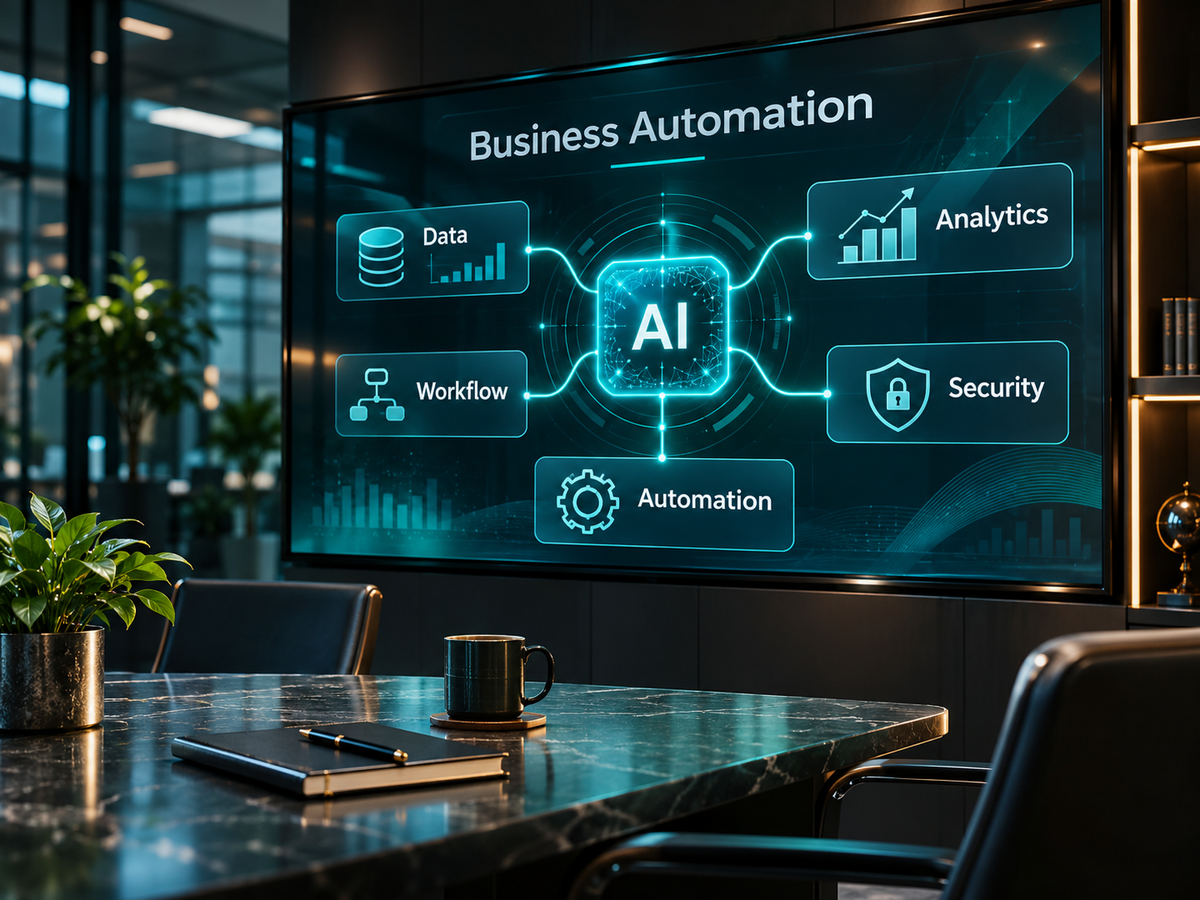
Your Business Doesn't Need More Software. It Needs Smarter Operations.
Business growth demands more than simply adopting new technology. As organizations expand, managing customer relationships, employee operations, inventory, and order fulfilment becomes increasingly complex.
Avatar India's AI Adoption Ecosystem offers a business-focused approach to digital transformation through solutions such as CRM, HRMS, IMS, OMS, Recruitment CRM, and Script Automation.
By helping organizations streamline repetitive processes, improve operational visibility, and manage essential business functions, the ecosystem aims to support greater efficiency, productivity, and scalable growth.
This article explores how these business management solutions address everyday operational challenges, why a connected technology strategy matters, and how startups, MSMEs, and established enterprises can approach business automation more effectively.
Primary Focus: AI Adoption, Business Automation, Digital Transformation, and Operational Efficiency.
Target Audience: Startups, SMEs, MSMEs, enterprises, business owners, operations managers, and decision-makers.
Transforming everyday business challenges into opportunities for growth with Avatar India's AI Adoption Ecosystem.
The Hidden Challenge Behind Business Growth
Every growing business reaches a point where managing daily operations becomes just as challenging as acquiring new customers.
Sales teams struggle to track customer interactions. HR departments spend valuable time managing employee records and approvals. Inventory teams work to maintain stock accuracy, while operations managers coordinate orders across multiple systems.
Individually, these challenges may appear manageable. Together, they create something much bigger: operational inefficiency.
The problem is not always a lack of technology. Often, it is the absence of the right technology working within a clear operational strategy.
Businesses may already be using multiple applications, yet still experience delays, fragmented reporting, repetitive data entry, and communication gaps between departments.
Adding more software does not necessarily eliminate these challenges.
What organizations need is a smarter approach to managing business operations.
The next stage of business transformation is not about adopting more tools. It is about making business operations more intelligent, efficient, and connected.
That is the thinking behind Avatar India's AI Adoption Ecosystem.
Why Smarter Business Operations Matter More Than Ever
Digital transformation is no longer limited to large enterprises or technology-driven organizations.
Startups, SMEs, MSMEs, and established businesses increasingly need digital systems to manage operational complexity and maintain competitive efficiency.
As transaction volumes grow and business activities expand, manual processes can become difficult to manage consistently.
Organizations may encounter challenges such as:
- Scattered customer information and missed follow-ups.
- Time-consuming employee administration.
- Limited visibility into stock availability.
- Delays in order processing and fulfilment.
- Repetitive administrative work.
- Fragmented management reporting.
These challenges can affect productivity, operating costs, customer experiences, and business decision-making.
Technology can help address these problems, but only when the solutions selected align with actual operational requirements.
The objective should not be to digitize every activity without a clear purpose.
It should be to identify where better systems can improve everyday business performance.
Introducing Avatar India's AI Adoption Ecosystem
Avatar India's AI Adoption Ecosystem brings together business management and automation solutions designed to simplify essential processes, reduce repetitive administrative work, and improve operational visibility.
Rather than treating sales, human resources, inventory, and order management as isolated functions, the ecosystem supports a more structured approach to managing business activities.
Its core solutions address four essential operational areas:
- CRM: Customer relationship and sales management.
- HRMS: Employee and workforce management.
- IMS: Inventory tracking and stock management.
- OMS: Order processing and operational coordination.
Additional solutions, including Recruitment CRM and Script Automation, extend the ecosystem's scope to recruitment administration and repetitive business workflows.
Together, these tools provide organizations with options for addressing operational challenges according to their specific requirements.
1. CRM: Turn Customer Relationships into Business Opportunities
A successful sales operation requires more than a database of contacts.
Businesses need visibility into customer interactions, clear accountability, consistent follow-ups, and an organized sales pipeline.
When customer information is scattered across spreadsheets, messages, and individual employee records, opportunities can be missed.
Avatar Customer Relationship Management (CRM) is designed to help businesses organize customer information, manage leads, monitor sales pipelines, and coordinate follow-up activities.
With a structured CRM process, teams can:
- Track leads and customer interactions.
- Organize sales activities and follow-up responsibilities.
- Monitor pipeline progress through management dashboards.
- Improve visibility into salesperson performance.
- Reduce dependence on fragmented spreadsheets and manual updates.
For business owners and sales managers, a CRM provides a clearer view of ongoing sales activities and potential business opportunities.
The objective is straightforward: help sales professionals spend less time organizing information and more time building customer relationships.
Better customer management creates a stronger foundation for sustainable sales growth.
2. HRMS: Make Workforce Management More Efficient
Employees are one of an organization's most valuable resources.
Managing them effectively requires accurate information, dependable administrative processes, and consistent communication.
As organizations grow, manual attendance records, leave approvals, employee information, and performance reviews can become increasingly difficult to coordinate.
Avatar Human Resource Management System (HRMS) is designed to bring structure to workforce administration, helping organizations manage employee information, attendance, leave requests, and HR activities.
A well-organized HRMS can support:
- Digital employee records and workforce information.
- Attendance tracking and management visibility.
- Leave applications and structured approval processes.
- Employee performance oversight.
- Workforce reporting and management coordination.
For HR teams, this helps reduce repetitive administrative responsibilities.
For managers, it improves access to relevant workforce information.
For employees, it supports more consistent and transparent HR processes.
The objective is not to replace human judgment with software.
It is to create an environment where HR professionals can focus more on employee development, engagement, and organizational effectiveness.
Better workforce management begins with better visibility.
3. IMS: Improve Inventory Visibility and Control
Inventory management plays a critical role in retail, manufacturing, distribution, and other product-based businesses.
Without accurate inventory information, organizations may experience stock shortages, unnecessary purchasing, excess inventory, and fulfilment delays.
These challenges can influence operational costs, purchasing decisions, and customer satisfaction.
Avatar Inventory Management System (IMS) focuses on helping businesses organize and monitor inventory information more effectively.
A structured inventory management approach supports:
- Better visibility into stock availability.
- Organized inventory records.
- Monitoring of inventory movement.
- Improved stock accountability.
- More informed purchasing and replenishment decisions.
- Smoother coordination between inventory and operations teams.
For inventory-dependent businesses, reliable information is essential for effective operational planning.
When managers can access relevant stock information, they are better positioned to identify discrepancies, plan requirements, and coordinate activities.
When inventory information becomes easier to access and manage, operational planning becomes more reliable.
4. OMS: Bring Structure to the Entire Order Journey
An order represents more than a transaction.
It represents a commitment to the customer.
From order creation to processing and fulfilment, multiple activities must be coordinated to deliver a consistent customer experience.
As order volumes increase, manual coordination can create delays, inconsistent records, and communication challenges.
Avatar Order Management System (OMS) helps businesses organize order information, monitor order progress, and manage operational workflows with greater visibility.
A structured order management system supports:
- Centralized order information.
- Better tracking of order status and processing activities.
- Improved coordination between departments.
- Reduced dependence on manual order updates.
- More organized fulfilment processes.
For growing businesses, an OMS provides a stronger operational foundation for managing increasing transaction volumes.
Better order visibility can help managers identify processing requirements and coordinate activities more efficiently.
A well-managed order journey contributes to more consistent operations and better customer experiences.
5. Recruitment CRM: Organize Hiring and Candidate Management
As businesses expand, recruitment becomes an increasingly important operational responsibility.
Managing candidate information, applications, interview schedules, and hiring communication across disconnected systems can create unnecessary administrative complexity.
Recruitment CRM is another solution organizations can explore to bring greater structure to recruitment workflows.
An organized recruitment process can help HR teams maintain candidate information, coordinate hiring activities, and improve visibility into recruitment progress.
For businesses expanding their workforce, structured recruitment management supports more consistent hiring operations.
6. Script Automation: Reduce Repetitive Business Tasks
Many business processes involve repetitive activities that consume employee time without requiring substantial human judgment.
These may include recurring data updates, routine information processing, repetitive report preparation, and predefined administrative workflows.
Script Automation focuses on opportunities to simplify suitable repetitive processes through automation.
By identifying activities that follow predictable steps, organizations can explore ways to reduce manual effort, improve process consistency, and allow employees to focus on higher-value responsibilities.
The goal of automation is not simply to complete tasks faster. It is to create more time for work that matters.
Why an Integrated Business Ecosystem Matters
Consider a growing business that generates customer enquiries, converts sales opportunities, manages inventory, and fulfils customer orders.
A CRM organizes customer interactions and sales activities.
An IMS helps the organization monitor inventory availability.
An OMS brings structure to order processing and fulfilment.
An HRMS supports the employees responsible for executing business operations.
Each solution addresses a distinct requirement.
However, when these systems are appropriately integrated, they can support a more connected flow of information across departments.
For example, information from a sales process may inform order management activities, while inventory data can help operational teams assess stock availability.
The availability of these workflows depends on the integrations implemented between the systems.
This is where the broader value of an ecosystem approach emerges.
The objective is not simply to provide individual tools but to help organizations evaluate how technology supports their overall business processes.
Real operational efficiency comes from connecting people, processes, and information—not merely increasing the number of applications.
Where Artificial Intelligence Fits Into Business Automation
AI adoption should begin with a business problem, not a technology trend.
Organizations frequently spend substantial time on repetitive activities such as data entry, reporting, follow-up coordination, and information retrieval.
Traditional automation can help manage structured and rule-based activities.
AI-assisted capabilities, where appropriately implemented, can support more advanced tasks such as information analysis, reporting assistance, and workflow support.
For example, businesses may explore AI-assisted approaches to preparing reports, retrieving operational information, and identifying patterns within business data.
However, introducing AI successfully requires more than installing software.
Organizations must consider:
- Existing process efficiency.
- Data availability and quality.
- Employee training and adoption.
- Information security and access control.
- Measurable operational outcomes.
- Appropriate human oversight.
AI should support informed decisions rather than replace accountability.
Through the AI Adoption Ecosystem, businesses can explore relevant technologies and assess where automation or AI-assisted capabilities may create practical operational value.
How Indian Businesses Can Begin Their Digital Transformation Journey
Business transformation does not need to begin with replacing every existing system.
A more practical approach is to identify the business function experiencing the greatest operational difficulty.
For a small business struggling with customer follow-ups, CRM may be the most relevant starting point.
For an expanding organization, HRMS may help establish better workforce administration.
For a retailer or distributor, IMS may improve inventory visibility.
For an organization processing growing order volumes, OMS may support more structured order workflows.
Businesses with repetitive administrative tasks may also explore Script Automation.
A practical transformation strategy can begin with four steps.
Step 1: Identify operational challenges
Examine existing workflows and determine where delays, repetitive tasks, errors, or information gaps occur.
Step 2: Prioritize business requirements
Focus on processes where improvements are likely to deliver meaningful operational value.
Step 3: Select suitable technology
Evaluate solutions based on functionality, usability, scalability, implementation requirements, and their suitability for the organization.
Step 4: Measure operational improvements
Track relevant outcomes such as administrative time, workflow completion, information accuracy, and process visibility.
This approach helps businesses evaluate technology as a strategic operational investment.
Business transformation does not need to begin with everything. It needs to begin with what matters most.
Why Choose Avatar India's AI Adoption Ecosystem?
Businesses need more than software availability.
They need clarity about which solutions are suitable for their operations and how those technologies can address practical business challenges.
Avatar India's AI Adoption Ecosystem follows a business-first approach to technology adoption.
Its portfolio of CRM, HRMS, IMS, OMS, Recruitment CRM, and Script Automation solutions allows organizations to explore technologies relevant to different operational requirements.
Rather than requiring every business to adopt every product, the approach focuses on helping organizations identify solutions aligned with their priorities.
Businesses can explore available tools, discuss operational requirements, and request personalized product demonstrations.
This creates an opportunity to evaluate software capabilities before making investment decisions.
Frequently Asked Questions About Business Automation and AI Adoption
1. What is an AI Adoption Ecosystem?
An AI Adoption Ecosystem brings together digital technologies, automation solutions, and supporting processes to help organizations adopt suitable technology for their operations.
2. How can CRM, HRMS, IMS, and OMS improve business efficiency?
CRM supports sales and customer management, HRMS organizes workforce administration, IMS improves inventory visibility, and OMS structures order management. These systems can improve operational consistency and coordination, particularly when appropriately integrated.
3. Is business automation suitable for MSMEs and startups?
Yes. MSMEs and startups can begin by automating specific processes rather than implementing multiple systems simultaneously. The most suitable solution depends on business requirements and available resources.
4. Do businesses need to implement all software solutions together?
No. Organizations can prioritize one operational challenge and adopt additional solutions as their requirements evolve.
5. How does AI differ from traditional business automation?
Traditional automation follows predefined rules and structured workflows. AI-assisted capabilities can support more flexible tasks such as information analysis, content preparation, and certain forms of decision support.
Building a Business That Is Ready for Tomorrow
The most competitive businesses will not necessarily be those using the largest number of applications.
They will be the organizations that understand their operations, identify inefficiencies, and invest in solutions that help their teams perform consistently.
For startups, this may begin with structured lead management.
For growing enterprises, the priority may be workforce administration, order processing, or inventory visibility.
For organizations managing repetitive administrative activities, automation may provide opportunities for operational improvement.
The right starting point depends on the business.
What matters is having a clear understanding of the challenges technology needs to solve.
Smarter operations create the foundation for more efficient, scalable, and resilient businesses.
Discover Avatar India's AI Adoption Ecosystem
Avatar India is building a practical approach to business automation through CRM, HRMS, IMS, OMS, Recruitment CRM, Script Automation, and other technology solutions.
Our focus is on helping organizations identify operational challenges, evaluate suitable technologies, and move toward more efficient ways of working.
Whether your organization needs better customer management, workforce visibility, inventory control, or order processing, the first step is identifying the right solution.
Your business is growing. Your systems should be ready to grow with it.
Explore Avatar India's AI Adoption Ecosystem and Book a Personalized Demo
Avatar India — Helping businesses move from software adoption to smarter operations.